







September 30, 2026
Article
·
Single Family Offices
·
time
-min
read
Family Office Trends
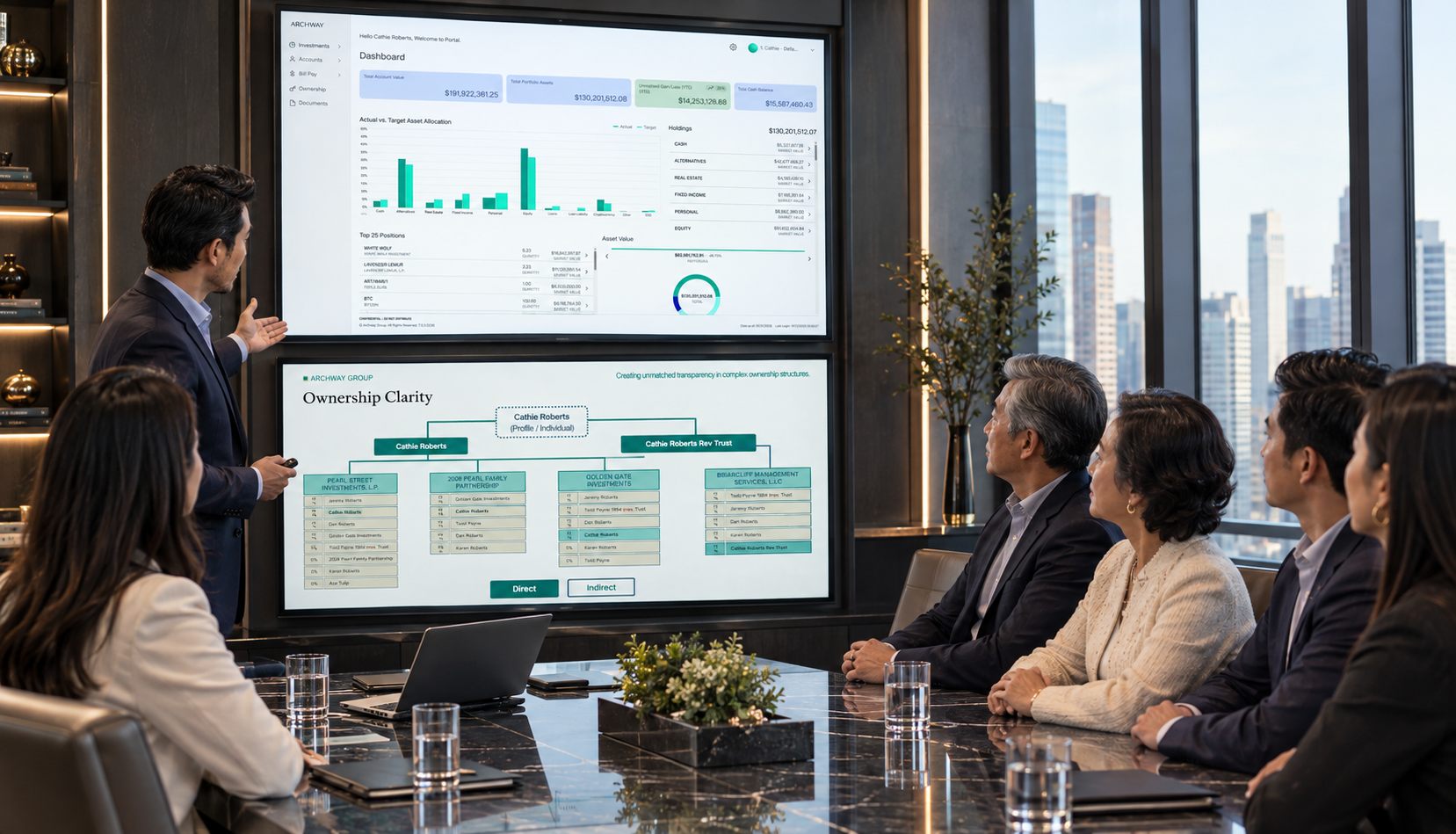
Your Investment Reporting Is Excellent. Your Partnership Accounting Is Probably a Liability.
Why family office partnership accounting is harder than it looks.

Megan Greer
The Distinction That Gets Overlooked
Most family offices have built serious investment and portfolio reporting. They know what the family holds, what it is worth, and how it has performed. That visibility is necessary. It is not sufficient.
Investment reporting tells you the family holdings and their value. Partnership accounting tells you who owns what, on what basis, under what agreement, and what the accounting, tax and legal consequences are of every allocation, distribution, and transfer. A family office with one but not the other is making decisions on incomplete information and creating liabilities it will not recognize until they surface in an audit, a family dispute, or a K-1 that does not match what someone was told to expect.
Partnership accounting sits at the intersection of investment operations, tax, and estate planning. It is one of the most technically demanding functions inside a family office, and one of the most consequential when it goes wrong. Here is why it is harder than it looks, and where most family offices fall short.
Why Partnership Accounting Is Uniquely Complex
Family offices use partnership and LLC structures extensively: investment holding, estate planning, liability isolation, generational wealth transfer, governance. While the structures themselves are not unusual, the combination of competing demands makes administering them so challenging.
Ownership structures are layered and bespoke. A single investment may sit inside a holding LLC, which feeds a family partnership, which distributes to individual family members through trusts established at different times for different purposes. Each layer needs its own set of books. Getting consolidated reporting right means looking through every layer, eliminating intercompany balances so the same asset is not counted twice, and showing each beneficial owner their true economic exposure across the full structure. Most of these structures were built for estate planning or tax efficiency, not operational simplicity, and few follow a standard template.
We start with the governing documents which define preferred interests, profit interests held by family members, stuffing and other special allocations that split income, and gains differently across branches of the family. The accounting follows the governing documents precisely, and general-purpose platforms were not built for that level of complexity and layering.
Book to tax is an annual scramble. Most family offices run on a cash or accrual basis all year, then hand everything to an external tax advisor to convert to tax basis and prepare Form 1065s and K-1s. That process is only as good as the records underneath it. In a layered structure, one entity's K-1 feeds the next entity's return before that return can be completed, so the reconstruction starts from the bottom up, one layer at a time. In a structure with nested trusts, holding LLCs, and family partnerships, that can mean dozens of entities and weeks of professional time before a single K-1 is produced.
The increase in illiquid asset investments increases the long tail in valuations further complicating the matter. Private equity, real estate, hedge funds, direct investments: most do not price daily, and some have no formal valuation cadence at all. Without a policy for carrying values between valuation dates, the family office waits on every manager and appraiser before it can close the books. Many do exactly that. Consolidated reporting arrives 90 or more days after quarter end, well after it could have informed the decision it was meant to support.
Capital accounts require daily reconciliation. Every contribution, distribution, allocation, and transfer between entities, including in-kind transfers of real estate or private securities must be captured and posted accurately, or the account quickly stops reflecting reality. Left unaddressed, small discrepancies compound until reconciling them becomes a project rather than a routine.
Amid the myriad functions that are already stretching small finance teams, communication becomes its own layer of complexity. Why one branch of the family received a different allocation than another is not always self-evident, even when it is entirely correct under the partnership agreement. Those nuances are easily resolved through proactive communication, adding yet another step that needs to be thoughtfully managed by the same small team.
Where Most Family Offices Fall Short
The common failure is not a single mistake. It is an accumulation of workarounds that made sense at a time. A spreadsheet built to handle one partnership becomes the model for five. The one accountant who understands the allocation logic never writes it down. K-1 season is an annual scramble because partnership accounting and investment reporting live in two systems that were never built to agree.
Family offices are also investing more in formal governance: investment committees, valuation policies, approval matrices. J.P. Morgan's 2026 Global Family Office Report found that 48% of business-owning families have established formal governance bodies, compared with 40% of non-business-owning families. But governance defines control and accountability. Operations determine whether the controls are actually followed. Knowing where decisions are made means little if the numbers they need are being assembled by hand.
The result is not necessarily wrong numbers. It is a fragile operation: accuracy depends on specific people staying in their seats, reporting always runs a quarter behind, and the governing documents, investment reporting, and accounting records have quietly drifted apart in ways nobody has fully mapped. When a key person leaves, or the family's complexity outgrows the infrastructure supporting it, the cost of reconstruction is always higher than the cost of building it right would have been.
How Archway Can Help
Archway's platform maintains multi-entity ownership structures, parallel capital account bases, and allocation logic configured to the terms of each governing document. Investment reporting and partnership accounting run on the same general ledger, so the number in the report and the number in the books are the same number.
For family offices that also need accounting support, Archway’s Family Office Accounting team works as an extension of the family office’s own staff. The staffing challenges that make partnership accounting fragile in most family offices (attrition, coverage during leave, demand spikes at audit season and tax time) become Archway's to manage, not the family office's. The family gets consistent, high-quality accounting that does not depend on one person staying in their seat.


May 14, 2020
Article
·
Single Family Offices
·
time
-min
read
Family Office Reporting
Financial Reporting
The Dos and Don'ts of Client Reporting for High-Net-Worth Families
Shares practical dos and don’ts for producing effective high-net-worth client reports, from customization and automation to portal adoption and data clarity.

Chelsea Francis
·
Head of Strategy
How Family Offices and Financial Institutions Can Create Effective Financial Reporting for High-Net-Worth Families
As a financial caretaker for high-net-worth families and individuals, you face a lot of pressure to not only manage and preserve your clients’ wealth but also communicate and deliver on it at any given time.
With an abundance of tools and solutions available to help your team manage the workload, it’s easy to get pulled down the path of delivering too much of the wrong information that ultimately fails to engage your end-client. Avoiding this mistake is crucial.
After all, the purpose of client reporting is to translate complex investment data into clear, concise reporting that meets your clients at their level.
There’s a lot to consider to make client reporting effective, but a few of the most important questions to answer include:
- Who will be reading the reports? What level of reporting detail are they comfortable with?
- Is the reporting easy to consume? Does it meet their expectations?
- Are you including the right types of reporting? For instance, is the client interested in a monthly review of cash inflows and outflows or would they prefer to look at investment performance and exposure?
- Are you able to access all of the data you need to completely represent the client’s financial holdings? Are you able to easily slice and dice the data in a way that makes sense to the reader?
- Does the report layout help the reader visually move through the data? Do ancillary charts and graphs add value or are they a distraction?
- How will you get reporting to your end-client? Digitally? In person?
Below we’ve compiled a list of tips for reporting on high-net-worth wealth – a set of client reporting dos and don’ts – to help your family office or financial institution produce effective personal financial reporting.
The Dos and Don'ts of Client Reporting
DO: Ask family office staff and family members what financial reports they wish they had
In a world where financial reporting options are endless, how do you know what reports the client wants if you don’t ask? Invite them to share their opinion, learn their preferences and listen to their questions – at the end of the day, personal financial reports should represent the client’s complete net worth in a way that makes sense to them.
To start, meet with individual family members or households to get a better understanding of their financial knowledge and reporting expectations.
Questions you could consider asking your clients:
- How do you measure financial success?
- How do you want to categorize your holdings?
- How do you want to view investment performance? In a table or a graph?
- What level of detail do you like to see on your personal financial reports? Do you prefer to see a summary of your holdings or the underlying position detail?
- Are you interested in traditional financial statements like balance sheets, income statements and cash flow reports?
Similarly, be sure to meet with internal family office staff and advisors to define what operational reports can be produced to improve financial insight and decision-making.
DON’T: Implement a “one size fits all” reporting style
This suggestion is simple, but often overlooked – if your family office or financial institution is looking to stay competitive in a growing and evolving industry, forgo the cookie-cutter style reporting and focus on delivering reports that speak to each individual client’s needs, goals and preferences.
DO: Offer report flexibility and customization
Report customization is the obvious next step once you understand your end-clients’ reporting preferences.
That said, starting with a blank canvas can prove to be challenging. We recommend taking a controlled customization approach. For example, family office software can provide a library of accounting and investment reports, each with their own unique set of parameters. Using the parameters as guide posts, family office staff can run a single report in a variety of different ways to help them align reporting with each of their end-client’s unique expectations.
DON’T: Feel like you need to write your own reports
Although report writers allow you to create wholly unique reports, they can be cumbersome to use and often require a certain degree of technical skill. In lieu of a standalone report writer, look for a family office fintech solution that offers built-in reporting capabilities with plenty of room for customization.
By using a software solution with an integrated reporting engine, you can eliminate the need for in-house technical support and reduce the amount of time spent maintaining the reports.
DO: Seek ways to improve your family office reporting speed, efficiency and efficacy
“How can I speed up my family office reporting process?” is a question we hear regularly from family offices evaluating the reporting tools within the Archway PlatformSM.
One of the ways our family office clients accomplish this is by leveraging the automated report preparation and delivery tools within the Archway Platform. These built-in features eliminate manual data collection, report creation and delivery processes. Using these tools, family offices create a consistent, repeatable reporting process and provide a predictable reporting experience for their end-clients.
DON’T: Stick with your current family office reporting process for fear of change
We understand it can be difficult to shift away from your existing reporting processes – after all, they’re comfortable and familiar. But they can also be frustrating and, more consequently, time-consuming. If your family office has an aversion to change, consider a few “what if” scenarios.
What if I could aggregate data more efficiently and quickly? What if I could set up and schedule recurring report runs? What if I could save my report settings instead of recreating them every time I have to run a report?
Innovative technology for family offices is at your doorstep, it’s just a matter of embracing it.
DO: Implement a family office client portal
One of the biggest trends we’re seeing in family office fintech – and a key differentiator for private wealth firms – is the use of client portals. With benefits like on-demand access to personal financial reporting and availability from any location, it’s no surprise that client portals are at the top of the wish list for family offices and financial institutions.
By implementing a family office client portal, your end-clients have self-service access to their financial data via interactive dashboards and intuitive charts, graphs and tables. With clients viewing their aggregated financial information on their own schedule, you can reduce the amount of time you spend fielding questions and delivering reports.
DON’T: Assume that every family member will use modern reporting technology immediately
It’s likely that you’re producing reports for family members across several generations, each with their own level of comfort when it comes to technology. Knowing your audience – and respecting their technology preferences – is key to engaging your clients.
If you’re working with a tech-savvy family member, they’re likely already demanding digital access to their personal financial reporting. But if you’re working with a family member who is less interested in digital reporting, take your time warming them up to the technology by introducing it slowly and purposefully. It’s important to be patient and thorough in your training to help mitigate the risk of overwhelming your clients and potentially disenchanting them with the client portal altogether.
DO: Leverage automated reporting software and outsourced financial reporting services for help
In an age where everything and everyone moves at rapid speed, it’s essential that your family office moves at a similar pace.
Designed to adapt to your clients’ evolving interests and needs, family office reporting software offers purpose-built features and functionality like advanced data aggregation and reconciliation tools, user-defined classifications and groupings, integrated performance reporting and extensive report libraries.
Likewise, many firms employ teams of accounting and finance professionals that can operate the software on your behalf to ultimately deliver consolidated financial reporting to you and your end-clients.
Whether you’re looking to produce financial reporting in-house or leverage an outsourced service provider, a fintech solution designed specifically for family offices will help you deliver internal and end-client reporting with greater accuracy, speed and clarity.
DON’T: Rely on manual, time-consuming reporting processes
If your family office is still sifting through clunky spreadsheets and stacks of paper statements or manually maintaining classifications for grouping data, you could be saving time and closing the gap on human error.
Although familiar and easy to use, generic reporting solutions – including spreadsheets – are prone to error and aren’t intended to be a reporting tool for complex family offices. Adopting family office-specific reporting software can eliminate these antiquated means of reporting and provide system-wide functionality that is built for the management of complex wealth.
Ready to find out how you can take your personal financial reporting operations to the next level?
Learn how the Archway Platform can help your family office or financial institution handle complex reporting requirements and produce insightful, relevant reporting for your high-net-worth clients.
April 29, 2020
Article
·
Single Family Offices
·
time
-min
read
Family Office Software
Bill Payment
Managing the Family Office Bill Payment Process Amid Social Distancing
Explains how digital bill pay tools help family offices manage approvals, payments, documentation, and reporting when teams cannot rely on physical processes.

Natalie Peters
·
Relationship Manager
How Digital Bill Pay Tools Can Help You Remotely Manage Bill Approvals, Payments and Expense Reporting for UHNW Families
For many of us in the family office world, we’re no longer sitting in bustling offices or attending in-person boardroom meetings. We can’t request a physical signature on a check or hand our boss a packet of financial statements to review.
It goes without saying that COVID-19 has changed the way we do business and while there’s hope that many things will eventually get back to some version of normal, not everything should. As with any crisis situation, this global pandemic has exposed gaps in how businesses operate – even family offices.
As an award-winning accounting technology provider, one of the most disrupted processes we’ve learned about from our family office clients is their ability to manage the bill payment process.
The sentiment seems to be broadly shared across the family office space.
According to a recent blog published by Family Office Exchange addressing the COVID-19 crisis and its impact on family offices, family offices cited a need to improve their bill payment and document storage technology.
It’s apparent that with paper invoices still being sent to empty offices, verbal approvals still being required to pay bills and signatures still being handwritten on pre-printed check stock, there are multiple points of failure throughout the process. Pandemic aside, the inherent rigidity of manual processes can threaten operational efficiency, but it’s never been more apparent than in the absence of physical interaction.
Why You Should Already Be Using a Digital Bill Payment Tool
Digital tools – like the bill payment functionality embedded in Archway’s family office software, the Archway PlatformSM – can help family offices efficiently manage their operations regardless of physical location.
By leveraging the built-in features within our accounting technology solution, your family office can:
- Reduce the frequency of its manual bill pay processes
- Minimize required in-person contact like verbal or written approvals
- Execute quicker, more secure bill payments
- Produce accurate, timely expense and cash flow reporting
As you evaluate your technology infrastructure, it’s more important than ever to look for technology you can rely on. Technology that eases the duty of physical distance. Technology that modernizes rudimentary processes.
As for digital bill payment tools, we recommend the following considerations:
Automated Workflow
Workflow – or process management – is the series of steps that must be followed in accordance with your internal process mandates. Related to bill payment, this can include invoice review, accounts payable data entry, invoice approval, payment settlement and even expense and cash flow reporting.
Automated workflow tools enable you to implement pre-defined accounting controls that enforce separation of duties and require authorized parties to electronically provide approvals based on your family office’s unique bill pay process.
Client Portal
An interactive client portal enables family members and family office staff to participate in the AP process regardless of their geographic location.
As a result, family principals can remotely access their accounts payable information, approve bills and view expense, cash flow and other financial reporting via their mobile device – whether it be their PC, tablet or smartphone.
Digital Payment Approvals
Digitizing payment approval enables family members and family office staff to automate and execute those actions with no physical interaction.
Going beyond simple “approve” and “deny” functions, end-users of the Archway Platform can pre-approve and set dollar limits for specific vendors – like utility companies or credit card issuers – and set dollar limits to allow the payment process to continue fluidly by automating routine approvals.
Electronic Signatures
Electronic signatures, or e-sigs, are a simple image of a handwritten signature that can be applied to checks, documents or forms upon approval by a designated representative.
When it comes to the bill payment process, creating and securely storing e-signatures allow permissioned system users to apply e-sigs to checks which can be cut and printed directly from the platform. This means that family members don’t need to be physically present in order to sign checks and complete the payment cycle.
Document Management
Known by many names – document manager, document repository, document vault – this tool allows you to securely store and share digital files.
For bill payment, these files may range from vendor invoices and W-9 forms to bank statements, expense reports and other AP documents. Using the document repository, users can share, access and download relevant documents from a single, centralized location.
If you aren’t looking to invest in bill payment technology, but find the bill pay process cumbersome, consider evaluating outsourced bill pay services. At Archway, our financial administration team can assume the responsibilities of bill payment while still allowing approvals and oversight to come from your family office staff and end-clients.
Discover how your family office can leverage the Archway Platform’s accounts payable technology – whether it’s in-house, outsourced or some combination of both – in our Accounts Payable Functionality Overview.
March 26, 2020
Article
·
Single Family Offices
·
time
-min
read
Family Office Software
Product Development Strategy
Why Your Fintech Provider's Approach to Product Development is Important
Identifies three traits of innovative family office fintech providers: strong customer focus, a flexible roadmap, and awareness of industry trends.

Eric Sampson
·
Relationship Manager
3 Traits Family Offices and Financial Institutions Should Look for in an Innovative Fintech Firm
The ever-changing fintech industry has family offices and financial institutions facing increased pressure to deliver modernized client experiences and customer-friendly technology solutions. In order for your firm to remain competitive in such a rapidly evolving industry, it’s critical to source a technology provider that is committed to continuous product innovation.
While we’ve written a lot about finding the right fintech solution, one thing that’s worth highlighting is finding a technology solution that will adapt and extend to exceed your clients’ expectations.
As an award-winning fintech provider with decades of experience, we have an innate commitment to make sure we design and develop innovative products that evolve, improve and simplify the way our clients do their jobs. This calls for an attuned ear towards user feedback, an aggressive product roadmap and a constant pulse on industry trends. We believe that this is how all fintech providers should operate, but this isn’t always the case.
In reality, over time, some software companies slow their development cycles, limit their solution innovation and settle into a “this is the way we’ve always done it” attitude. These software companies oftentimes brandish lower costs and brand-names to attract prospective clients, but lack the forward-thinking of a truly innovative fintech firm. As a result, clients who expect state-of-the-art technology and streamlined processes instead endure a disproportionate amount of dissatisfaction.
To help you find a fintech firm that is acutely aware of the importance of product growth and innovation, we’ve identified three basic traits to look for as you evaluate potential solutions:
Strong Customer Focus
At the epicenter of every innovative company is the customer and their needs. Without customer buy-in and approval, product or service solutions will never be successful. So, naturally, it makes sense to put them as a firm’s focal point when building out new solutions.
By analyzing customer satisfaction and feedback – what do users like or not like, how can we help our clients scale their business of tomorrow, can you eliminate clicks to complete a task, what tool would help them better perform their job, how does our software help them be more efficient – innovative technology firms are more adept at building useful solutions.
As you evaluate potential solutions for your family office or financial institution, look for ways in which the provider collects client concerns, questions, requests and solution enhancements.
At Archway, we utilize customer focus groups, online enhancement request forums and face-to-face meetings between software users and our relationship managers to allow our clients to have their voices heard. Using their feedback and suggestions, we build solutions that address genuine client needs while moving our family office platform forward in tune with the broader industry’s expectations.
Malleable Product Roadmap
A product roadmap is a fundamental tool used by fintech firms large and small. It provides collective guidance on the direction of the platform and solution, it helps teams prioritize product aspirations and, as an added bonus, it can serve as a tool during the due diligence process as prospective clients ask “What will the solution look like one year, three years and five years from now?”
It sets the direction not just for the product and engineering teams but for the entire firm.
Without it, firms can easily lose focus of the platform’s ultimate goals resulting in disjointed product releases and incremental enhancements that don’t deliver widespread, notable efficiencies for users.
That said, a product roadmap doesn’t always need to be set in stone. Technology development and innovation occurs at lighting speed so a product development roadmap should not be criticized if priorities shift to meet client, prospect and industry demand. A product roadmap is an ever evolving document.
It requires continuous adjustments based on feedback from both internal and external stakeholders and it balances development of new, progressive features with the enhancement of existing, foundational functionality.
Awareness of Industry Trends
While a strong product development strategy requires a keen focus on feedback, it’s also important that your potential technology provider stays current with fintech and overarching technology trends.
To do this, many family office technology and service providers participate in the same membership-based communities and conferences as family office professionals and HNW family members.
Through these partnerships and events, firms are able to gather feedback and knowledge about emerging technologies like blockchain and machine-learning, hear first-hand what financial services firms are looking for in their technology and service solutions and gather insight into what’s on the horizon for the industry as a whole.
By interacting with members of the industry who may have different needs and wants than their existing user-base, technology teams are in a better position to diversify and build out their product functionality.
As you evaluate technology providers, ask them what conferences they attend. Do they go to industry conferences to understand the evolving needs of family offices and financial institutions that work with HNW families? Do they attend large-scale fintech conferences where they can gather ideas for future product innovations? Do they understand the entirety of the technology landscape – and how they can leverage other tools to create efficiencies in their own product suite?
Identifying technology providers that keep an open mind towards product innovation, gather and implement customer and prospect feedback and are willing to pursue new ideas will help you find a technology partner that can grow in stride with your own firm.
Archway Family Office Services is proud to be part of an organization of people determined to deliver transformative fintech solutions. Archway’s commitment to innovation stems from a culture that empowers our team to find new answers, solve complex problems, inspire each other and learn from both our successes and our failures – so that we can continue to move the market forward.
As we embrace this commitment to innovation, we are excited to share our ongoing enhancement to the Archway PlatformSM.
Originally published March 26, 2020, updated Mar 29, 2022
February 27, 2020
Article
·
Single Family Offices
·
time
-min
read
Single Family Office
Technology Due Diligence
How to Conduct a Successful Family Office Software Proof of Concept
Explains how to structure a family office software proof of concept around firm context, pain points, current-state workflows, and detailed use cases.

Dennis Mangalindan
·
Vice President, Business Development
Questions You Should Be Asking When Creating a Technology POC
If you’ve been tasked with finding the right technology solution for your family office, you know that a lot is on the line. You know that selecting the right technology solution can improve your family office’s efficiency and catapult your credibility as a decision maker – and selecting the wrong technology solution can put you in the hot seat.
Beyond asking the right questions, it’s important to remember: it’s not enough to take the vendor’s word for what they can do for your family office – they need to prove what they can do for your family office.
One of the best ways to accomplish this is through a well-crafted proof of concept (POC).
POCs allow you to take a deeper dive into the software application, which enables you to determine whether or not the platform’s capabilities can really address your biggest pain points. Furthermore, if proven successful, POCs offer tangible evidence that can be used to help you get buy-in for the investment within your family office and from the family itself.
However, as a family office fintech provider that’s been on the receiving end of thousands of technology evaluations and inquiries over the past two decades, we oftentimes hear family offices ask: what is the best way to come up with a proof of concept?
While there are lots of different ways to conduct a POC, we’ve identified four steps to help you construct a basic outline for a successful proof of concept.
Step 1: Create a proof of concept introduction
The first thing to consider when creating a proof of concept is outlining who you are as a firm and what you hope to accomplish with the POC. This may seem like a no-brainer to most – after all, we know who we are and what we need, don’t we? Truth be told, it’s one of the most overlooked components of a POC but provides your potential technology vendor with tremendous context around the complexity and logic of your processes and operations.
At this stage, it’s also important to provide detail around expectations and deliverables for the POC including goals, timeline and response format.
Step 2: Define your firm's most critical pain points
If you’re going through a family office software selection, we’re sure you already have a laundry list of challenges and inefficiencies you want to address with a new technology solution. But it’s important to narrow the scope in your POC so that the responding vendors can prioritize your biggest pain points and avoid getting bogged down with demonstrating the “nice-to-have” functionality.
At this point, you should be thinking in broad topics and we recommend limiting the scope of your POC to 5-8 pain points.
Examples of common pain points include accounts payable, partnership allocations and alternative asset tracking. As you and your team think through your operations, make sure to account for the volume, regularity and complexity of each pain point to make sure you’re including the most relevant and worthwhile set of scenarios in the POC, which we discuss in the next step.
Step 3: Describe the current and future state of operations
Once you’ve identified your generalized pain points, you can begin mapping each pain point to specific operations and tasks. The goal during this step is to describe how you currently execute these functions and what your expectations are for the future so that you can determine which specific tasks should be included in the use cases.
For instance, if the accounts payable function has been identified as a troublesome spot for your family office, begin outlining the explicit tasks that are challenging. Start by asking yourself which tasks are most difficult or cumbersome to complete: Is it check writing? Is it wire transfers? Is it tracking and reporting on expenses? Is it securely storing AP data like invoices and electronic signatures?
By letting the vendors know where your trouble spots lie, they can more effectively assert value over your current process, which ultimately helps you build buy-in towards the technology solution.
Step 4: Provide detailed use case scenarios
Using the list of tasks associated with each pain point, you can devise concrete examples and requirements for delivering on each component in the POC.
In many cases, your technology vendor may already have scenarios and sample data sets configured to prove out their capability. In other cases, the pain point may be so specific or the requirement so detailed that it makes sense to provide mocked up data for the technology vendor. If you plan to provide sample data, keep in mind whatever data you provide is what the technology vendor will replicate in their system, so make sure that it is accurate and complete before launching your POC.
Whether your family office is managing the due diligence process on its own or partnering with an experienced industry consultant, a POC gives your firm an opportunity to put technology vendors to the test as they vie to win your business. As a result, you are able to attest to the solution’s capabilities and verify that the vendor can, in fact, help alleviate your biggest pain points.
Download our mini ebook Family Office Tech Evaluation: Building a Successful Proof of Concept, which lays out four steps to help create a proof of concept and the questions you should be asking to help get you there.
September 11, 2019
Article
·
Single Family Offices
·
time
-min
read
Family Office Software
Family Office Reporting
Client Portal
Best Practices to Transition Your Family Office into the Age of Digital Reporting
Explains how family offices can transition legacy reporting into digital reporting tools while supporting different client comfort levels and generational preferences.
Chelsea Francis
·
Head of Strategy
How Family Offices and Financial Institutions Can Use Digital Reporting to Engage the Next Generation of High-Net-Worth Clients
The world of high-net-worth private wealth management is changing rapidly. Over the next 25 years we will see a change of the guard as $68 trillion shift from current wealth owners to heirs and charities according to the 2018 Cerulli report on high-net-worth and ultra-high-net-worth markets. According to the same report, by the end of the 25 years, Gen Xers will replace Baby Boomers as the wealthiest generation.
With this transition of wealth will come a new wave of expectations that will force many family offices and financial institutions to evaluate how they deliver their private wealth management solutions.
Andrew Fay, Senior Vice President of Fidelity Family Office Services, addressed the importance of finding near-term solutions that bridge the gap between current and future wealth holders.
More than ever, single-family offices and their executives must ensure they are aligned with the evolving needs of the family and staying relevant in an ever-changing world. In our opinion, offices need to consider how to stay one step ahead, accelerate their pace of change and find creative solutions to help the current family and future generations fulfill their ambitions.
– Andrew Fay, Senior Vice President, Fidelity Family Office Services
Whether these solutions tackle how you communicate with your clients or how you manage and report on their assets, family offices and financial institutions will be forced to adapt to the next generation of wealth holders.
Our focus is on the latter: reporting – specifically digital reporting – for high-net-worth clients.
Here are some best practices to help you transition your legacy reports into modern, digital reporting tools.
Get Ahead of the Curve
While the Great Wealth Transfer is certainly underway, it’s important to note that it’s not going to happen overnight. So, for most, the introduction of digital technology is two-fold.
On one hand, digital reporting needs to be available today in order to retain the next generation of wealth holders tomorrow. According to Financial Advisor magazine, between 66% and 90% of next-generation heirs leave behind their parents’ financial advisor soon after receiving their inheritance. By developing a digital strategy ahead of time, you can build relationships with the next generation and avoid finding yourself somewhere behind the eight ball.
On the other hand, you will likely still have a cohort of clients that prefer their financial reporting right where they can feel it: in their hands. Quite frankly, sometimes that’s just the way it is. But with today’s array of reporting tools for family offices and financial institutions, you can more often than not serve both contingencies – the ones that embrace technology and the ones that rebuke it – using a single platform.
For instance, the Archway Platform℠ features an integrated batching and scheduling tool that offers multiple ways to deliver client reporting including:
- Printed, hard-copy reports
- Digital reports shared via email, FTP or document manager
- Interactive dashboard-style reporting delivered via a client portal
With a variety of flexible reporting options, family offices and financial institutions can implement the right solution for each individual client.
Understand Your Client's Digital Intelligence and Build Out
If you find yourself in a position where you’re dealing with both of the aforementioned mentalities, we recommend taking stock of each client's digital intelligence to better understand their relationship with technology. For many, what comes across as an aversion to technology is really just a lack of understanding.
That said, there will always be fear in the unknown. So, start simple and build out.
Leverage Your Client’s Existing Reporting
While some clients – like Gen Xers and Millennials – will happily jump on the digital bandwagon, it’s important to give wary family members and end-clients ample time to become comfortable with the new technology.
If some of your clients seem less than enthusiastic about accessing their financial reports on a tablet, the best thing to do is to mirror their existing reporting experience. While this may seem redundant to a tech-savvy individual, you have to keep in mind that not all generations inherently understand – or trust – technology. So, when you begin to introduce the digital reporting tool, be sure to do so with a hard copy of their reports on hand.
If the client shows signs of skepticism or seems disinterested, use the paper reports to tether the data to a familiar source.
By creating a parallel between the client’s existing report package and the digital reporting available via the client portal, you reduce the risk of overwhelming your client and potentially turning them off from the digital reporting tool.
Start with the Basics
One way to do this is to grant limited access off the start. At a high level, you'll want to mimic the existing level of reporting detail to maintain consistency across the two reporting mediums.
For example, many digital reporting tools allow users to drill through summary-level data groupings to access the underlying details. Be sure to ask yourself, does the client's current reporting provide security-level or transaction-level detail? If the answer is no, make an effort to restrict the amount of detail that can be accessed inside of the client portal to avoid confusion.
When it comes to our platform, we typically recommend that family offices and financial institutions give their high-net-worth clients access to a subset of the available reporting tabs within the Archway Platform's client portal. We like to start with the Financial Overview Dashboard and the Document Manager tabs.
Financial Overview Dashboard. This screen provides clear visualizations of your client’s investment data in a comfortable, easy-to-consume format. Featuring dynamic charts, graphs and tables, this screen can be configured to show basic holdings and entity ownership or more sophisticated analytics like target-to-actual asset allocation and top performing investments.
Document Manager. This screen simply allows clients to download traditional PDF report packages that have been put together by their financial advisor or a member of their family office. In most cases, these report packages are the exact same reports that historically would have been printed, instead of provided digitally.
Since this feature represents nothing more than a new way of delivering your client’s reports and third-party documents, it’s easy to portray the client portal as a seamless extension of the existing reporting construct.
As your clients become more comfortable with the platform, you can begin granting access to other features upon request. By acknowledging that some clients may be less willing to adopt new technology, you can create a personalized transition plan to ultimately deliver a compelling reporting experience.
Become a Technology Advocate
Technology can be challenging for everyone, but that doesn’t mean learning new technology platforms should be made less of a priority. In fact, we often see that the family offices and financial institutions that fail to embrace client training largely undermine their technology investment.
If you’re well-versed in the platform and regularly position it as a solution to your clients’ problems, buy-in becomes organic. Here are a few scenarios where you can promote technology for the win through subtle client training:
On Available Cash
Client: I need to know how much cash is sitting in my accounts. We may need to liquidate some investments, I’m not sure yet. I have a meeting with a fund manager tomorrow afternoon, so I need an answer before then.
You: I can do you one better. Remember the Archway Client Portal we implemented? Let’s log into it and I’ll show you where to find that information right now.
On Reporting Customization
Client: I’m thinking about diversifying abroad through some foreign mutual funds. Where do we stand right now on our global allocation?
You: Let’s go through it in the client portal. All of your investments are tied to a security class called Region and you can toggle between the other security classes we set up like Asset Class and Sector. What percentage of assets were you thinking of allocating to foreign markets? We can create an asset allocation model so that you can compare your target to actual allocation from the portal’s dashboard as time goes on.
On Last Month’s Reports
Client: I met with my old business partner and he was asking if I’d invested in any interesting deals lately. Can you send me recent performance for all of my venture capital deals?
You: Sure. I’ll put together a report showing VC fund performance and drop it out in the portal’s Document Manager with some commentary on the investments. You’ll get a notification on your phone when it’s ready.
On Approving Bills
Client: I’m traveling to London for a few weeks and I don’t want to get behind on any of the expenses for the SoHo remodel. You’ll need my signature on the checks. What should we do?
You: Not a problem. As the invoices come in, we can set up notifications to go to you when I add new bills to the portal. Just log in on your phone, review the documents and approve them electronically. Alternatively, you can set up pre-approvals for the vendors working on the SoHo apartment so that we can auto-pay those expenses while you're out of the country.
On Data Security
Client: Why does Archway make me enter my password and a special code? This seems like a lot of work.
You: The special code is called multi-factor authentication and it’s there to protect your information. That feature is optional, so we can turn it off if you’d like but I would recommend keeping it in place to prevent your account from being compromised.
While not every issue can be solved by on-demand reporting and client portal technology, digital tools certainly lend themselves in your favor when it comes to being a reliable, timely resource for your affluent clients. As the transfer of wealth continues, make sure that your family office or financial institution is taking the necessary steps to remain relevant in the age of digital reporting.
Find out how Archway Family Office Services can help redefine the way your next generation of end-clients access and analyze their financial information using the Archway Platform's mobile client portal.
July 22, 2019
Article
·
Single Family Offices
·
time
-min
read
Family Office Software
Client Service
3 Tips to Maximize Your Fintech Investment
Shares three ways family offices can get more value from fintech investments: embracing change, continuing education, and using supplemental tools or services.

Chris Rose
·
Sales Director
How Family Offices Can Get the Most Out of Their Technology Solution
You know how to prepare your family office for a technology implementation project, but do you know what comes after your organization is up and running on the new system?
For many family offices, successfully implementing a financial technology solution is a welcome boost to their operational efficiency.
Saddled with modern, integrated tools and automated processes, family office teams can be more productive and more accurate. But while financial technology is an incredible tool, it’s only as good as your ongoing commitment to maintain the solution.
In other words, it’s simply not enough to implement a fintech platform for your family office.
To help you get the most out of your technology platform, we’ve come up with three tips to help you maximize your financial technology investment.
Embrace Change
To some degree, implementing a new technology solution means having to relearn how to do your job on a new system. And while no one likes a drastic learning curve, the benefits of modern family office technology generally outweigh the inconvenience of learning how to use the new tools.
Case in point, when it comes to reporting, family office financial technology can benefit both your internal accounting and investment teams as well as your end-clients. That said, we acknowledge that nearly every family office has its own version of reporting and it can be easy to get hung up on legacy reports. But when you’re transitioning to a new reporting tool, particularly if the old reporting tool was Excel, formatting and layouts are bound to change.
To soften this transition, we encourage our clients to take a step back and consider the data: do the new reports tell the same story as the old reports?
Most of the time, the answer is yes. But we also acknowledge how difficult it can be to abandon that old workbook in Excel. Now this is where the embrace change part comes in. New technology offers you a blank canvas and while you can spend your time repainting the same picture, you can also put that time-consuming, medley of Excel-based charts and graphs to rest and introduce a new package of clear, concise reports.
To help ease the shift from old to new, we recommend making time to sit down with both your internal staff and the family members you work with to discuss the benefits of the new reporting tool, address any concerns and introduce the new reporting. By establishing value early on, you can expect greater buy-in and a quicker adoption of the new technology.
Never Stop Learning
As a part of our implementation process, we like to ask our new clients to create a list of roles and responsibilities.
Who will be using the system? What functions do they need to perform inside of the platform? What types of reports do they need to generate?
This information helps us train our clients on the functionality that is pertinent to their role. But one of the most common mistakes we see in the technology space is abandonment. Once the technology solution is implemented and the users know how to perform their job functions inside of the system, they settle into their routines and they plateau.
We tend to see this manifest in two ways: failure to stay up-to-date on the system’s capabilities and reluctance to address small issues that require manual fixes or workarounds.
Let’s start with the workarounds. An example might be a bank fee that comes in automatically every month that gets posted to the wrong account. Instead of manually fixing the entry each month, most technology providers would rather you reach out to the support team to help you fix the issue once and for all.
Put it this way, if you spend two minutes per day manually correcting the issue this means that over the course of the year you’re spending an entire workday using a workaround.
2 minutes per day = 10 minutes per week
10 minutes per week x 52 weeks = 520 minutes
520 minutes / 60 minutes per hour = ~8.5 hours per year spent on a workaround
Whether you spend an hour reverting the books to fix a bad entry or dedicate an hour to learning a new tool that allows you to achieve the same result more quickly, you ultimately save yourself 7.5 hours that can be put towards a better use of your time.
That said, you may never know new tools exist if you don’t stay informed.
Ongoing product education is key to maximizing your technology investment, but it’s on you and your teammates to take full advantage of the education opportunities your technology provider offers. Read release notes and product documentation, attend user conferences and networking events and, by all means, ask for training when it’s needed. These educational resources are designed to help you succeed, which at the end of the day is the number one priority of any fintech firm worth its salt.
Leverage Supplemental Tools
It’s the job of a salesperson to sell you a solution that goes beyond satisfying your basic requirements, so when you first begin implementing a new fintech platform, it can be easy to get ahead of yourself. It’s only natural to want to test drive your shiny new toy, but it’s incredibly important to establish a solid foundation before you begin tinkering with the bells and whistles.
Start simple with the core tools. Using the Archway Platform℠ as an example, this includes defining your chart of accounts, learning how to use the investment and bank account information delivered via automated data feeds and establishing your reporting output. This may also include more specific types of functions like cutting checks or tracking intercompany loans, depending on the scope of your initial requirements.
Once you’ve become comfortable with the essential tools of the system, you can consider some of the nice-to-have features that you were originally sold on. Examples of supplemental tools to consider include:
- Asset modeling tools that define investment allocation models and allow you to produce target-to-actual reporting
- Automated fee billing capabilities that automatically calculate and bill client fees based on a variety of asset-based fee calculation methods
- Budgeting tools that allow you to create multiple budgets that can be used for budget-to-actual comparison
- Client portal technology that provides an interactive, mobile reporting dashboard for family members and end-clients
- Reconciliation screens that enable you to compare position-level and account-level activity within the system against an external data source to ensure data accuracy
- Report batching and scheduling functionality that allows you to save report configurations and establish recurring report schedules
In addition to supplemental tools, some technology firms also offer ad hoc services that can be leveraged to help your team be more efficient. If you find that your organization is spending an inordinate amount of time reconciling data, paying bills or processing partnership allocations, it may be worth considering whether business process outsourcing could be a good fit for your team.
In our case, Archway Family Office Services offers a variety of outsourced services that our clients can use on a standalone basis or in conjunction with their in-house operations teams.
What’s Next?
Regardless of what technology solution you choose to implement, remembering these tips can help you and your team get the most out of your new fintech platform and ensure that your investment doesn’t go to waste.
Haven’t made a decision yet?
Get in front of your technology investment by understanding the full suite of technology and service solutions offered by Archway Family Office Services.


